 |
 |
|
|
 |
|
 |
|
|
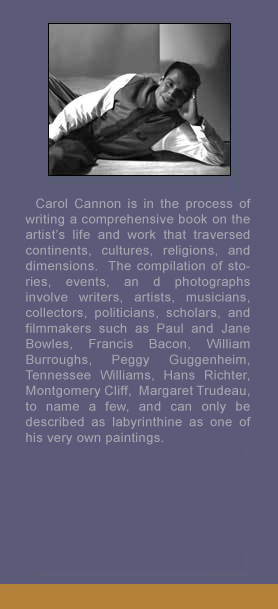
Being a descendant of the Prophet Mohammed’s (blessed be his name)on both his mother’s and father’s side, Ahmed BenDriss El Yacoubi’s life and art demonstrated a rare impeccability not found today in life or art. His life was a dedication to his heritage and his art was a devotion to his Creator’s Will.
|
|
Yacoubi’s unique gifts initially found expression in his uninfluenced way of drawing, and later, in an unparalleled technique of layering oil paint that resulted in indefinable yet Bosch-like surreal compositions portraying unseen worlds of mystery, beings, and beauty.
|
|
Without any formal education, Yacoubi surpassed the finest training and produced a prolific body of work that was exhibited around the world, reviewed with wonder by major critics of the time, and acquired by top collectors. Having been in storage for twenty four years since his untimely death at the age of 57 in 1985, his collection is being re-discovered and further appreciated for its rarity and exquisite subtleties.
|
|
Cannon Fine Arts is proud to present these exceptional works and make known the life of this extraordinary artist, Ahmed Ben Driss El Yacoubi.
|
|
The consistent thread that is found running through Ahmed ’s impressive collection of articles about his work is that of his gift to delve into,
reach, and bridge the usual gap between the conscious and unconscious areas of the psyche. This occurs both during his creative process and while a viewer opens his perceptions to the paintings. The writer, Willis Hall, has expressed, “Yacoubi is a poetical painter; his work is in turn mysterious and profound, even on occasion mischievous; But above all, he is an engaging painter and every painting contains that indefinable quality of painting which magnetizes the viewer to the canvas — which demands that he looks and goes on looking. ”
|
|
That same demand was felt by the Professor of Languages, Dr. Mohammed Aziz Lahbabi: “When we consider the works of a genuine visionary artist like Ahmed Yacoubi, we feel ourselves gripped by an electric current of communication, which, because of its naturalness, transcends the limitations of logic and leads us on to intense discovery.
On a different level, the pictures make demands upon us, demands which help us become aware of that part of ourselves which
can only be at peace in the midst of powerful emotion.” —
from “A Simplified Tale of Ahmed Yacoubi’s Life,”
— by Carol Cannon, 1979
|
|
|
|
|